Scene first. Identity second.
How a twin is built so it stays itself across hundreds of images, and the tools that come with it so your team keeps producing without me.
Scene first. Identity second.
The character never depends on the scene, and the scene never depends on the character. That separation is what keeps the identity stable at volume.


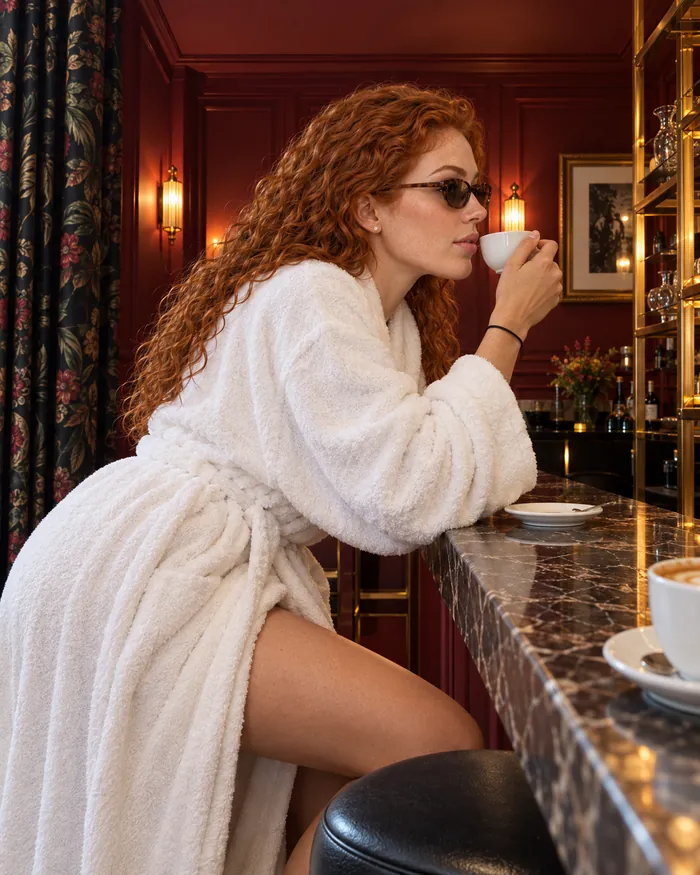
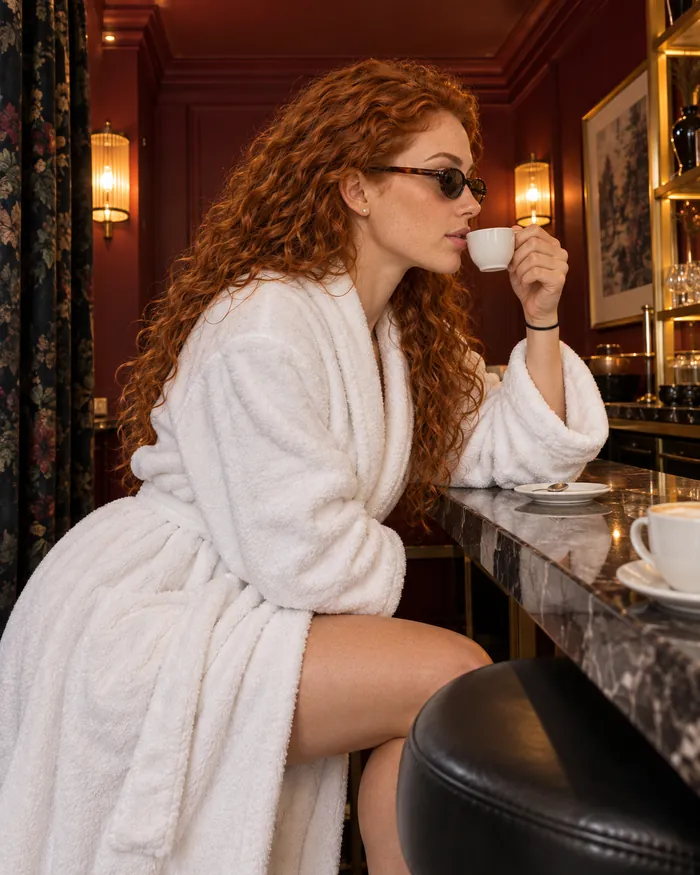


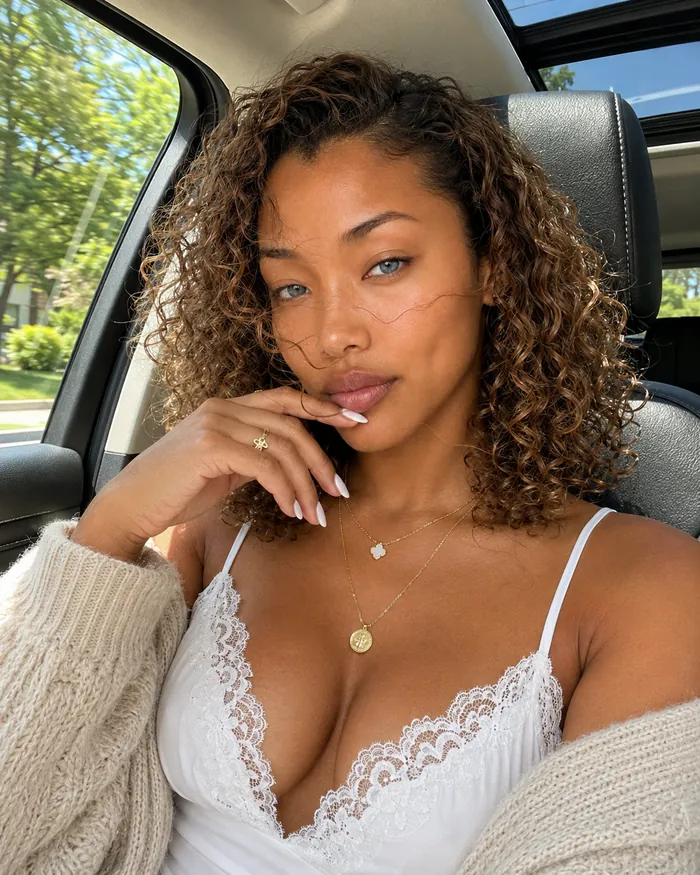

Lock the bible
Face, body, skin, hair and distinctive traits written down once, versioned, never overwritten.
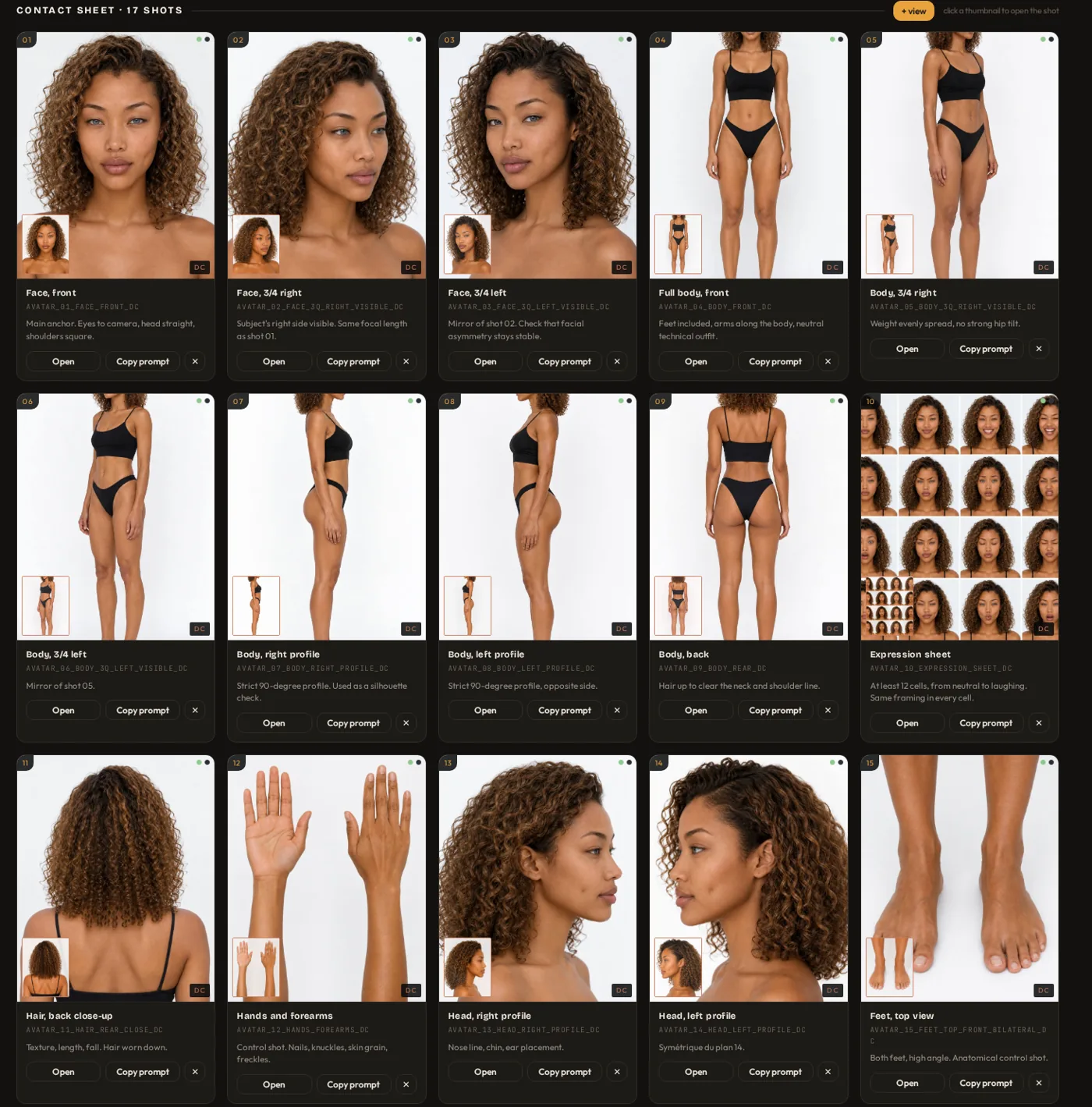
Generate the 17 views
Neutral background, same light, same technical outfit. Then a decontaminated version of each, engine style removed.
Build the scene
A generic base validates composition, light and outfit with a temporary person. No identity yet.
Apply and iterate
The identity is applied from the reference views and checked against the bible until approved. Every step is archived with its prompt.
Tools, not just files.
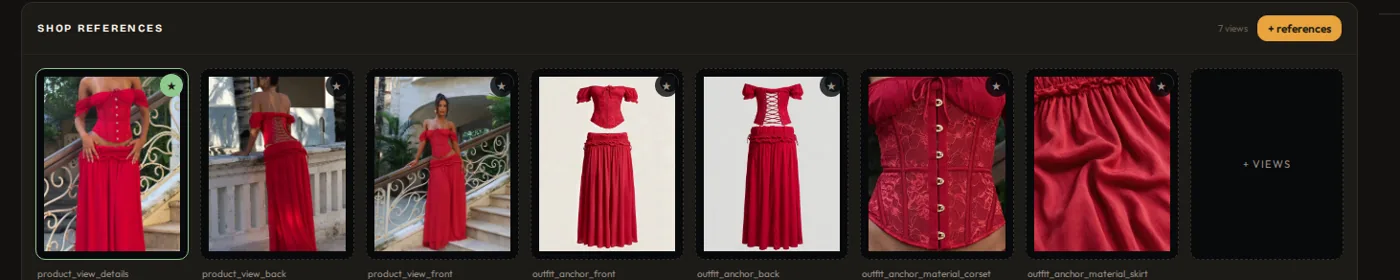
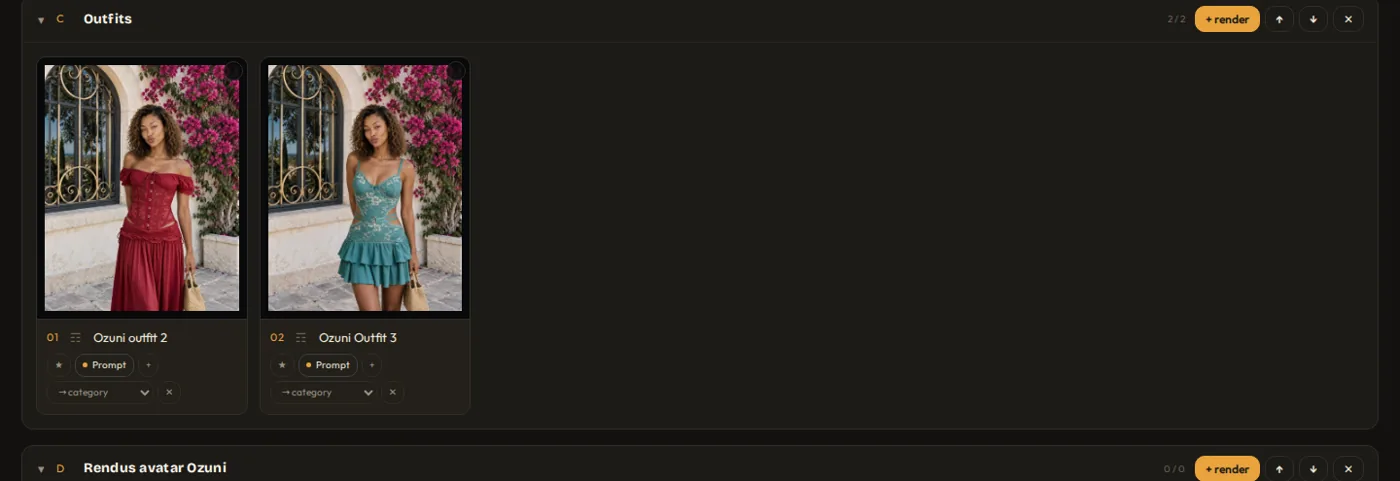
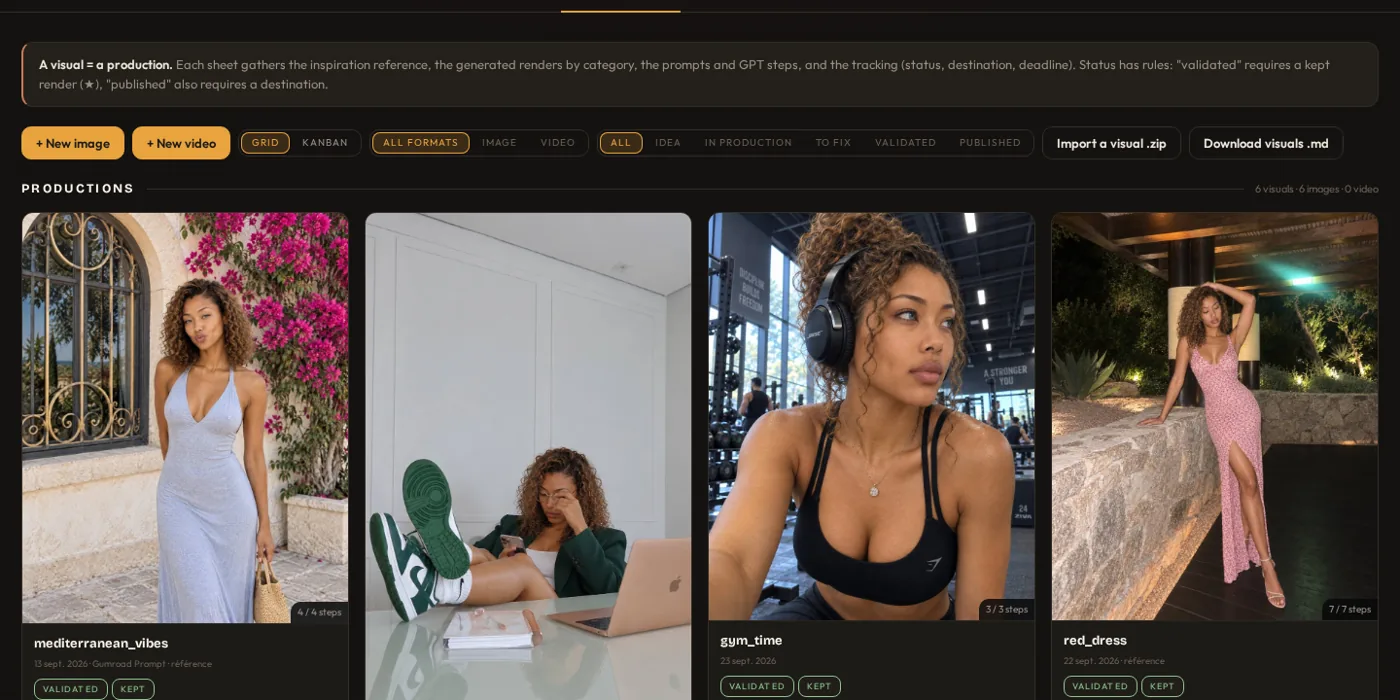
A character is not a folder of images, it is a system you keep producing with. Every package ships with the Avatar Anchor Deck, the production workspace I use myself, configured for your character: a single HTML file, no server, no account, FR · EN · ES.
What it holds
The versioned DNA sheet, the 17 reference views in original and decontaminated form, the outfit library, and every production with its renders and prompts. Nothing lives in my head or in a chat history.
How your team uses it
Open the file, pick a visual, read its status and next action. Guided mode walks a newcomer through the order of production; advanced mode gives a power user every field. Search across everything.
What you keep
The deck itself and a .zip export with a plain folder structure, readable without the tool: DNA in Markdown, images by view, one folder per visual with its sheet. Your production continues with or without me.
See what you receive.
Bible, 17 views, consistency sheet, content bank, dataset, Anchor Deck.